
Where the Signal Fades: A Reflection on My Father's Abduction and Thousands of Civilians Still in Russian Captivity
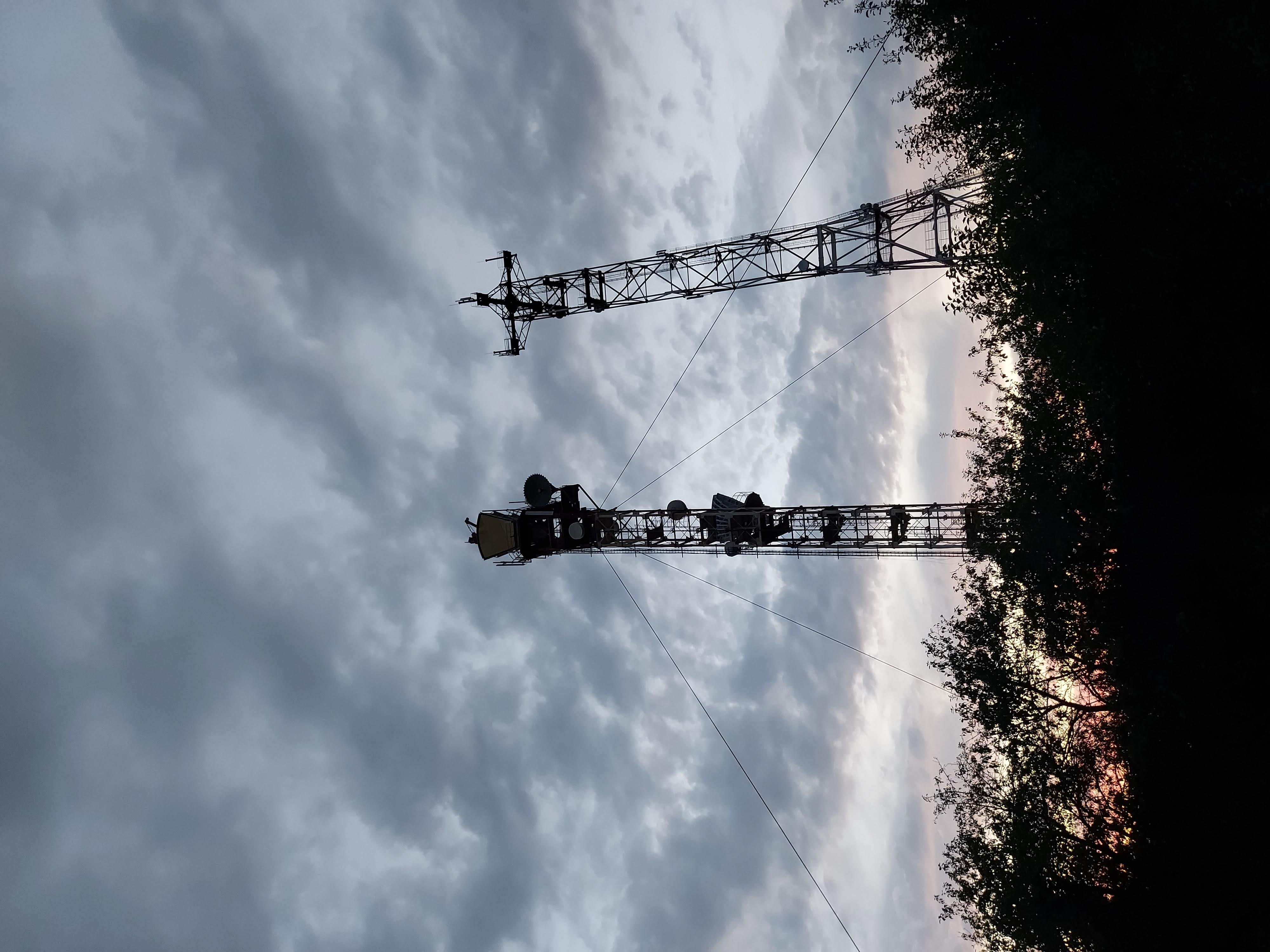
March 2022 was cold. Soon after Bairak, a small village in the Kharkiv region, was occupied, the electricity was cut off. He was the only engineer servicing a local radio relay station and the nearby TV tower. The occupiers had already looted the station, making it impossible to keep it running. But nearby stood another tower — the one that provided mobile network coverage to the surrounding community. So he did everything he could to keep the mobile tower running. It wasn’t his responsibility, but he knew: each day the generators — and the tower — kept running, every charged phone meant that someone could hear the voices of their loved ones, even in those dark times.
Another cold morning, another trip to refuel the tower. But not far from the destination, more than ten armed Russian soldiers surrounded him and his wife. The soldiers said he would come with them. They gave no reason for the detention, no explanation. They confiscated all the SIM cards, put him into an armoured vehicle, and drove off in some unknown direction, leaving his wife standing there alone, not knowing what to do next.
Some remaining fuel kept the tower alive for a little while longer, and through a neighbor’s phone, my mom managed to call me and tell me that my dad had been abducted by the occupiers.
Since then, my mom and I have been desperately searching for my dad. Trying to find out if any of those who survived the torture chamber in Balakliya, the closest town, knew anything about him. Looking among those tortured and then burned in the neighboring village and among those buried in the mass graves near Izium. Eventually, we learned that my dad was being held captive.
Yet, to this day – more than three and a half years later – Russian officials continue to deny his detention and refuse to provide any information regarding his location and health.
Unfortunately, this story is not unique. Since 2014, Russian forces have systematically abducted and unlawfully detained Ukrainian civilians. For something as simple as having a Ukrainian flag on your phone or in your home, voicing your thoughts, disagreeing with the occupiers, helping others, practicing your religion, speaking Ukrainian, or simply being disliked by the occupiers for a random reason, you can be abducted and locked in a torture chamber. Greater “offenses”, like writing children’s books in Ukrainian, can get you killed. And it doesn’t matter if you are a man, woman, elderly, or even a child. It doesn’t matter if you are ill or have a disability.
With the full-scale invasion launched in February 2022, the problem has reached catastrophic proportions. We don’t know the exact number, but it is estimated that Russia currently holds more than 16,000 civilians, and this number is growing. Among those forcibly taken are men and women, including elderly people over 70 years old, Ukrainians and nationals of other countries, people from all walks of life — from bus drivers to city mayors.
Some of the civilians in captivity are prosecuted upon politically motivated charges, tried, and convicted in sham courts. Others are wrongfully classified as prisoners of war, even though they have never taken up arms. Many are held incommunicado without any charges for years, with no contact with their families or the outside world. I will not describe the torture, mistreatment, and horrendously inhumane detention conditions — these violations are systemic and widespread.
What matters is this: the lives of all people in Russian captivity are in grave danger. The time is critical. Yet for a long time, the problem of unlawfully detained Ukrainian civilians was “lost in translation” and rarely ever discussed separately from the context of prisoners of war. And while civilians are held illegally, their release remains a challenge: since 24 February 2022, more than 6,000 Ukrainians, military personnel and civilians, have returned from Russian captivity. Fewer than 6% of them are civilians, meaning that only a few hundred out of thousands of civilian hostages have returned home.
At present, there is no clear path in sight to enforce international humanitarian law and rescue civilians from Russian captivity. The relatives fighting for their loved ones find themselves in a maze of organizations — the ICRC, UN committees and working groups, various national and international bodies. Over the last couple of years, attention to this issue has grown: legal mechanisms have been invoked, atrocities documented, and reports written. Yet we remain stuck in a loop of strongly worded condemnations.
In September this year, the Office of the UN High Commissioner for Human Rights published a report, which has a recommendation to the Russian Federation to “immediately cease and publicly condemn extrajudicial execution, torture, ill-treatment and sexual violence against civilian detainees, and end all unlawful practices relating to detention.” This document is essential, but I can’t help asking myself: What difference does this recommendation make to those who are now in captivity, those who are hungry, cold, in pain, in this very moment, as you read these lines? What difference does it make to my dad? Words alone are not enough. Decisive actions must follow them. Actions that will lead to the immediate and unconditional release of all civilians held in Russian captivity.
Every day I think about my dad. He did everything he could so that others could hear each other’s voices — yet I haven’t heard his voice since that fateful March morning.
At night, I dream about the moment he walks through the door. And I hope that soon will be the day when my dad, like all the others held captive, returns home. Alive.
 Photo from authors personal archive