
Remembering Maidan: Politics of Inclusion and Democratic Pluralism
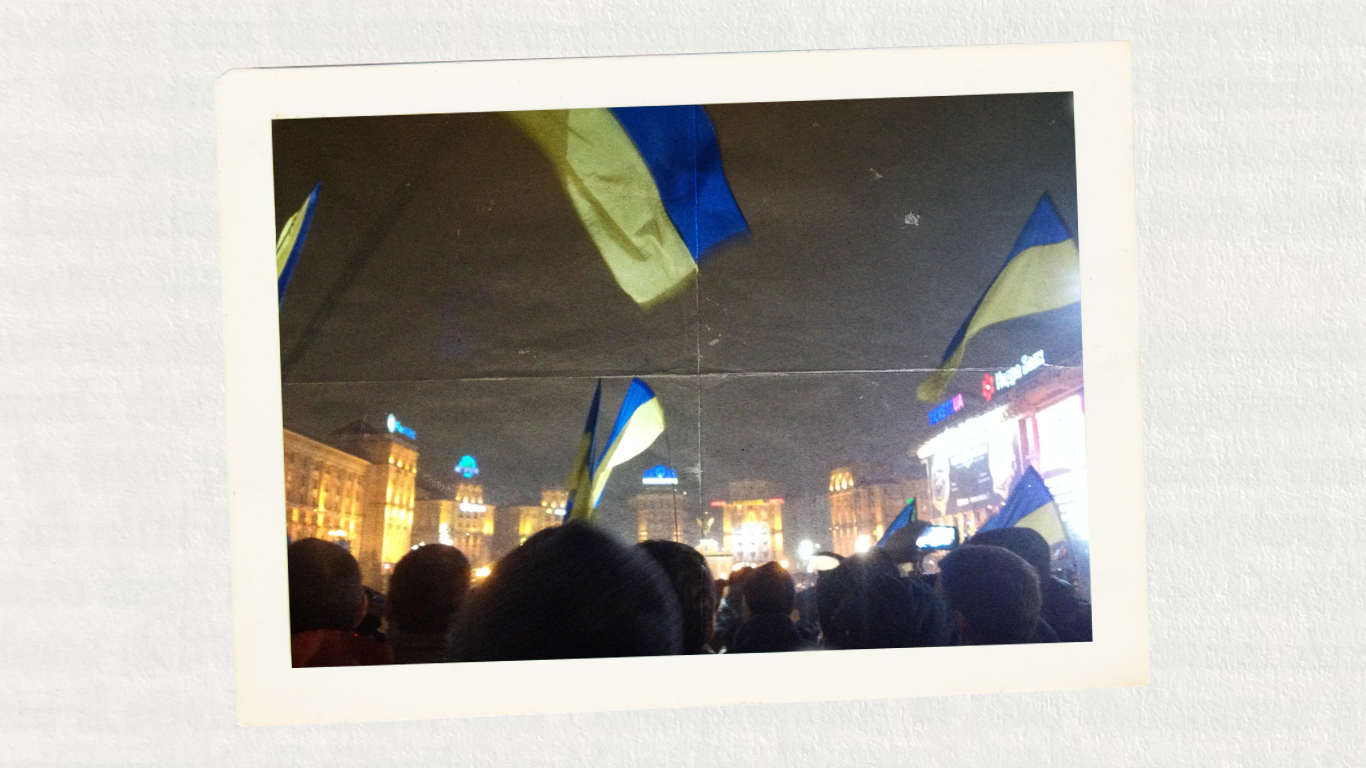
I remember the disbelief I felt when a leftist journalist I met for the first time in a New York bar around 2015 asked me what I thought about the revolution. Of course—I thought—he was asking about the Maidan, right? No, not Maidan. The “real”, Russian Revolution of 1917… Awkward silence. What did I think about the Russian Revolution of 1917? Why was he asking me this question? Wasn’t that a hundred years ago? I had just come from Ukraine, where we had experienced the largest democratic, grassroots, spontaneous uprising – one that ended not in defeat but in victory! No, he did not care about that revolution.
I lost count of how many encounters like this I have had over the course of my life abroad. It was irritating and exhausting to keep repeating the same things: no, Maidan was not a coup d’etat… No, the war in Donbas was not the result of Maidan… No, it was not a civil war.
Some of these misunderstandings have even been taken up by Ukrainians themselves, who complained that the revolution achieved nothing, that the political and economic systems remained intact, that oligarchs continued to exert power, and that Ukraine’s insidious sin of corruption remained unabated.
It is true that the path forward was ravaged by competing oligarchic interests and mistaken policies; indeed, a lot of work lies ahead. Yet it would not be an exaggeration to say that Ukraine has also made significant progress over the last twelve years, precisely because of the Revolution. In fact, Ukraine’s Maidan was the only recent mass uprising that not only succeeded in overthrowing an aspiring dictator and a mafia boss but also avoided falling into anarchy or producing another authoritarian regime, especially given the extent of Russia’s efforts to destabilize the country. Compared to other recent revolutions, from Georgia and Belarus to the Arab Spring, Ukraine's Maidan is the one that reached its goals.
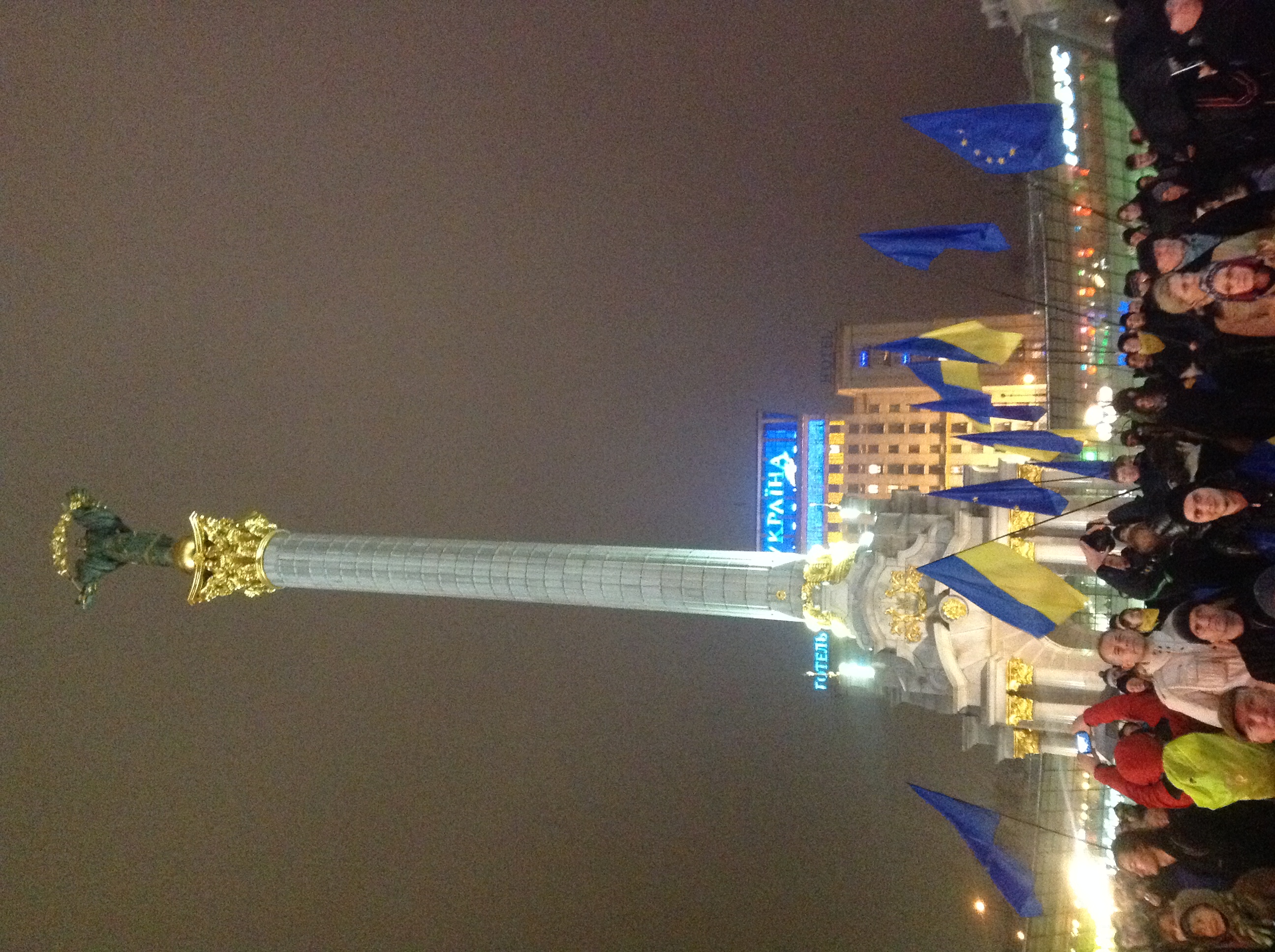
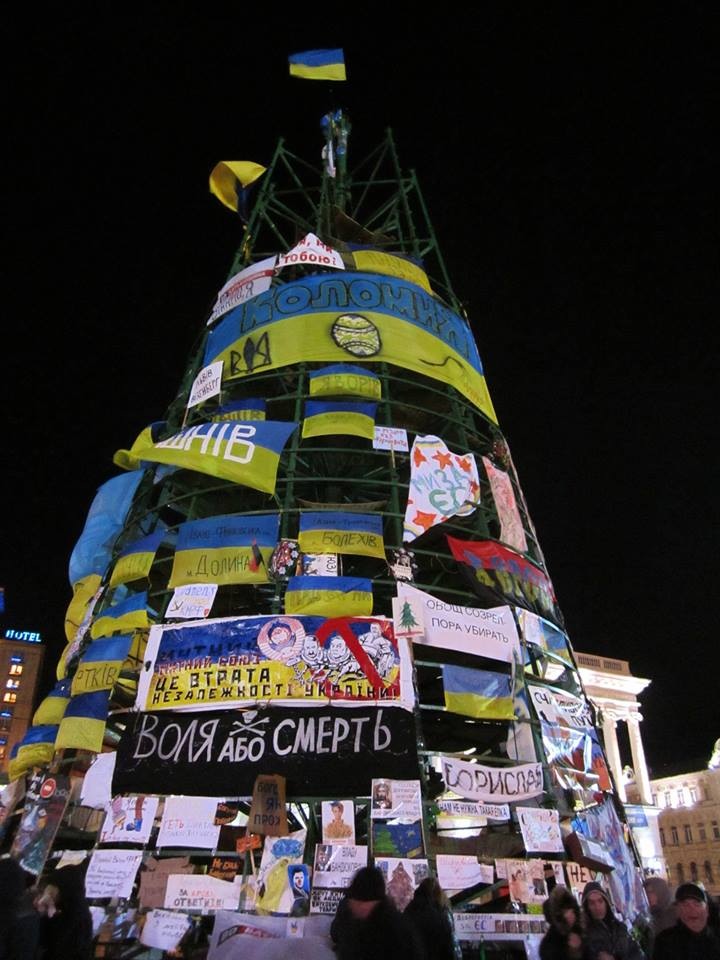
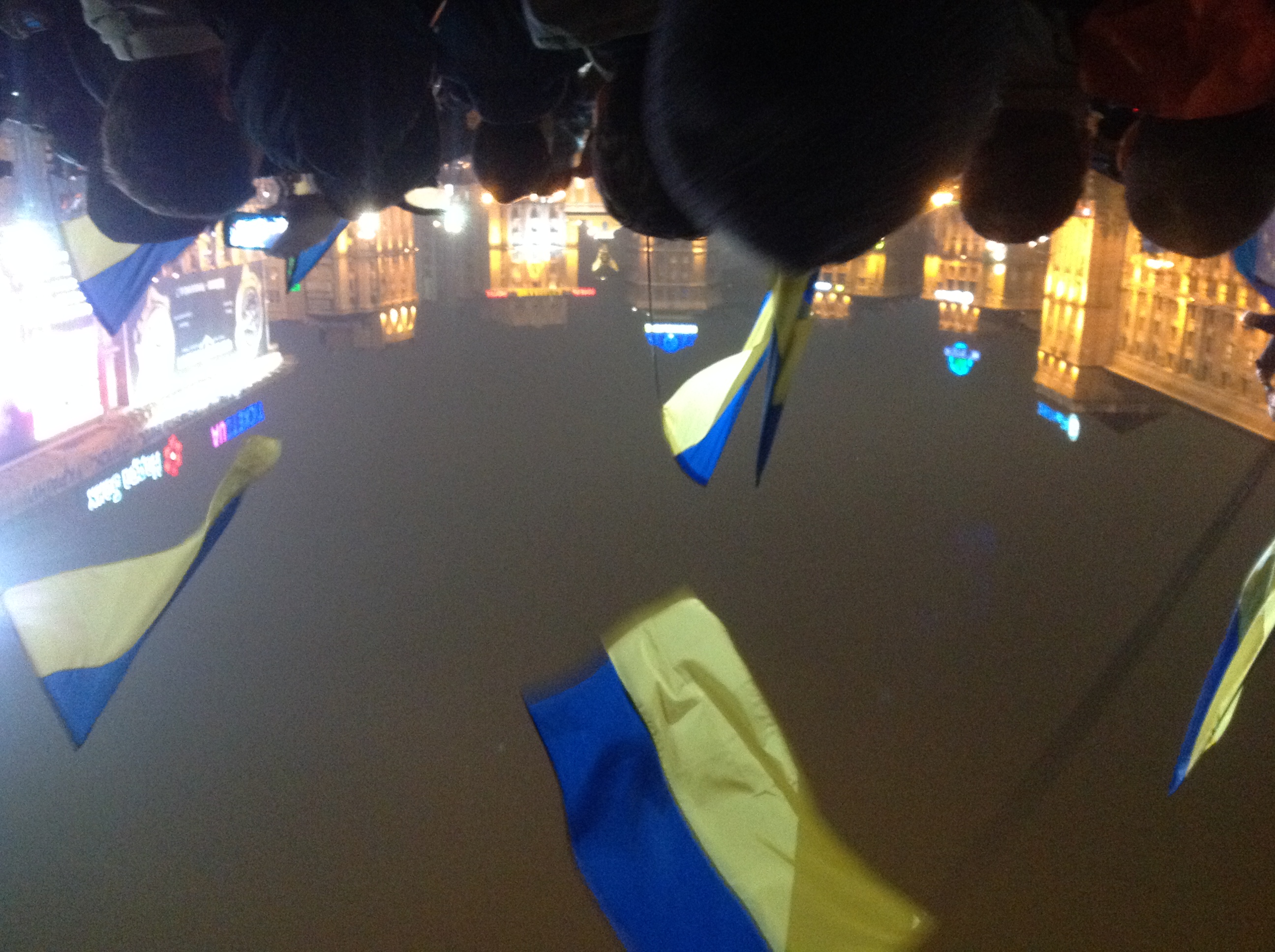
Photos from the author's private archive, 2014
It would take a longer piece to analyze and enumerate Maidan’s various achievements and setbacks, but here I would only like to emphasize just one, in my opinion, crucial yet underappreciated aspect of the revolution that not only secured its success but also offers something that should be replicated in our polarized world: a space of inclusion.
Beginning as a student protest, Maidan quickly became a massive nationwide movement, bringing together people from all walks of life who would otherwise never intersect. It brought together people of different social classes (although it remained predominantly middle class), ideologies, identities, and political persuasions. Maidan included both the far-right and the far-left, people with no politics at all, and politicians ready to capitalize on popular mobilization. It brought together businessmen and artists, students and professors, LGBTQ+ members and single mothers.
Although this diversity clearly has a downside – it made it difficult to produce a coherent program of action and rendered some protest messages empty signifiers – the value of such grassroots solidarity is hard to deny.
Far from being usurped by opposition politicians or far-right activists, Maidan managed to sustain this genuinely democratic inclusivity for many months of winter cold, government attacks and manipulations, and the outright violence of the riot police.
Maidan was a social experiment in which people of very different views and positions practiced radical care and solidarity and built horizontal connections from which the country still benefits today. In a way, Maidan was a miniature version of today’s Ukrainian Armed Forces: a structure composed of diverse people with diverse identities, united around a goal larger than political bickering and ideological campism.
In a time of mass political polarization, manufactured by social media and amplified by politicians, it becomes less and less imaginable to extend a hand to the other side. Social media bubbles and algorithms, ever more toxic political campaigns that seek to divide, alienate, and disintegrate communities, make such gestures seem almost impossible. Maidan shows, however, that you do not have to agree on everything in order to struggle together. In fact, given the challenges our generation faces – including climate change and renewed imperialisms – we no longer have the luxury of clinging to our dogmas and minor differences.
Daily life in Ukraine during the war teaches that combining otherwise incompatible things is possible. It is possible to enjoy a cup of drip coffee before submerging into the darkness of a blackout. It is possible to attend the funeral of a fallen soldier in the morning and hear Christmas carols as you pass the street in the evening.
The trick with inclusive spaces is that the only way they can be truly inclusive is by opening them to everyone – even to those with whom one disagrees. If Maidan has taught us anything, it is that such spaces are possible.
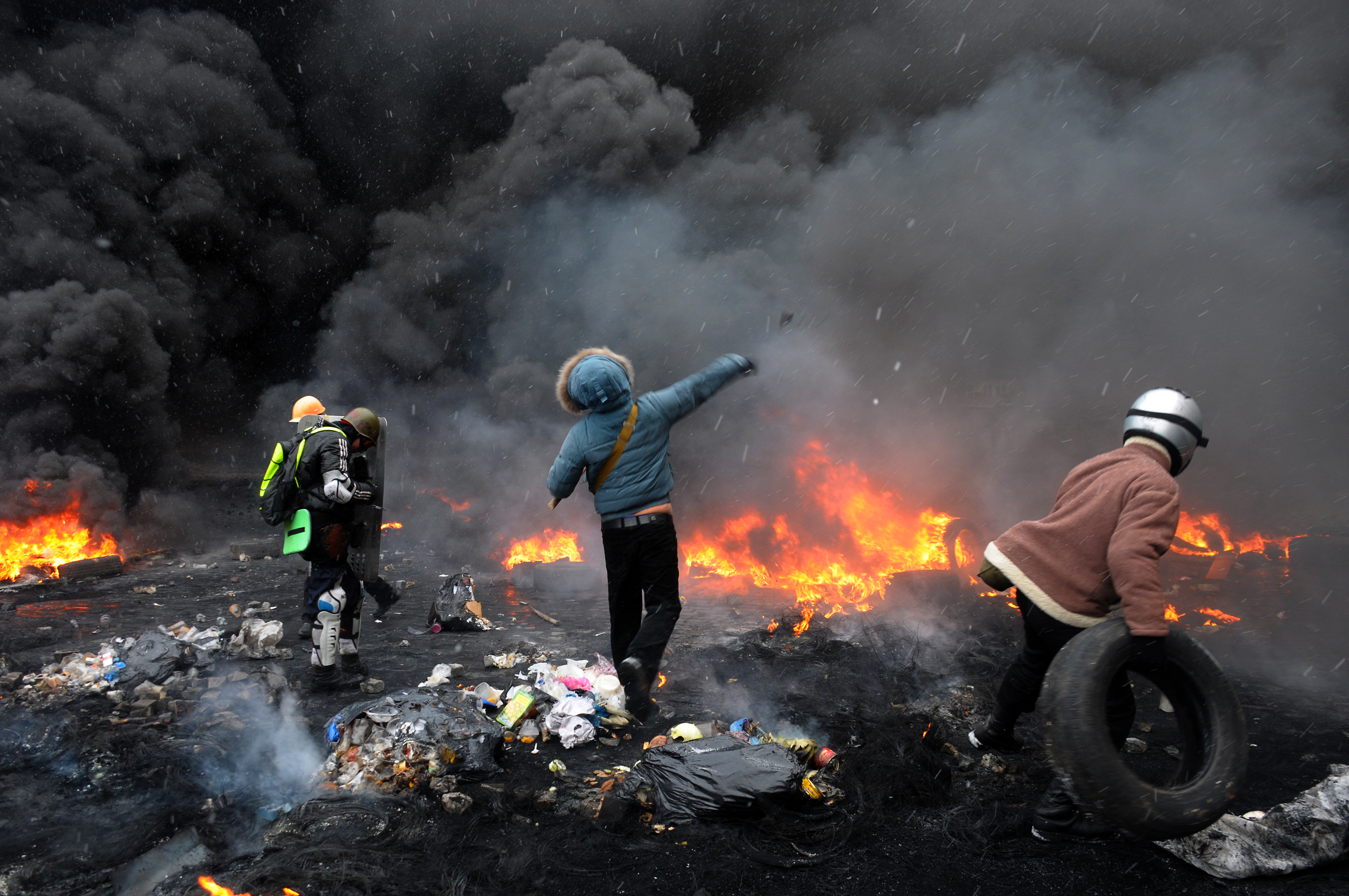
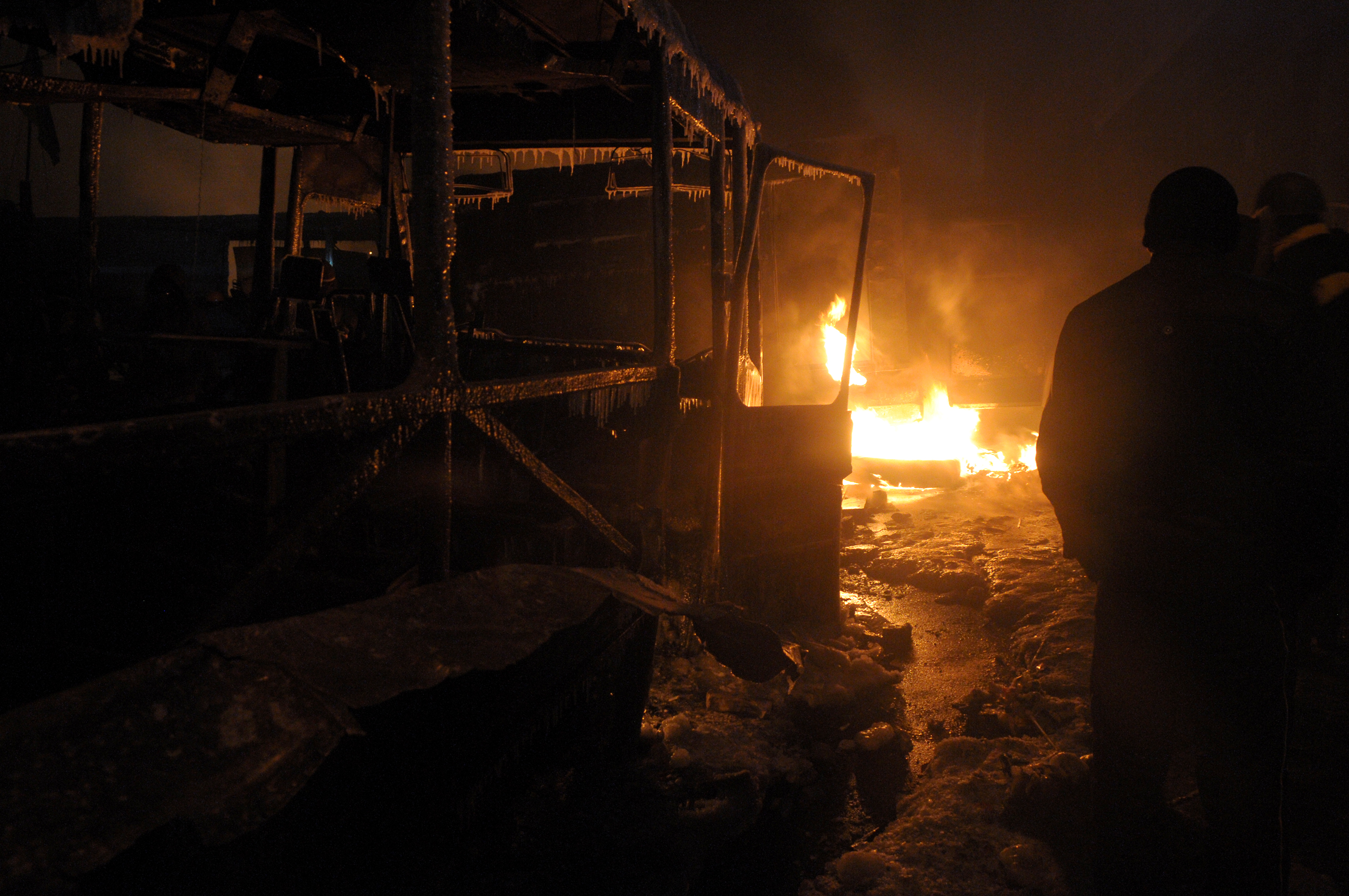
Photos: Roman Chornomaz, a Ukrainian photographer and sniper in the Armed Forces of Ukraine, who was killed in action in 2023. These pictures from the 2014 Revolution of Dignity were displayed at the INDEX space as a commemorative exhibition in winter 2025.