
Raphael Lemkin: the loneliness of a person fighting for justice
The concept of genocide was coined almost eighty years ago. The author of the term, Raphael Lemkin, described in such detail the intent and methods of destroying communities and even entire peoples, among which murder was only one of the tools, that the political elites of the post-war world were frightened. Lemkin's definition would have called into question their policies – some had just ‘released’ their colonies, while others still held on to them.
Out of fear, a modified version of the Convention was adopted in 1948, which abandoned the cultural and political basis of genocide and limited the crime to physical annihilation alone. This enabled the impunity of the perpetrators, which is still evident today in the context of, among others, Russia's war against Ukraine.
So who is Raphael Lemkin, a man ahead of his time, and can his legacy help bring about justice?
Raphael Lemkin was born on 24 June 1900 in Poland, in the village of Bezwodne (now Belarus), into a wealthy Jewish family. He had two brothers. His father worked as a farmer on rented land, while his mother took care of the children. It was she who instilled in the boy a love of foreign languages, which he would later go on to learn nine of.
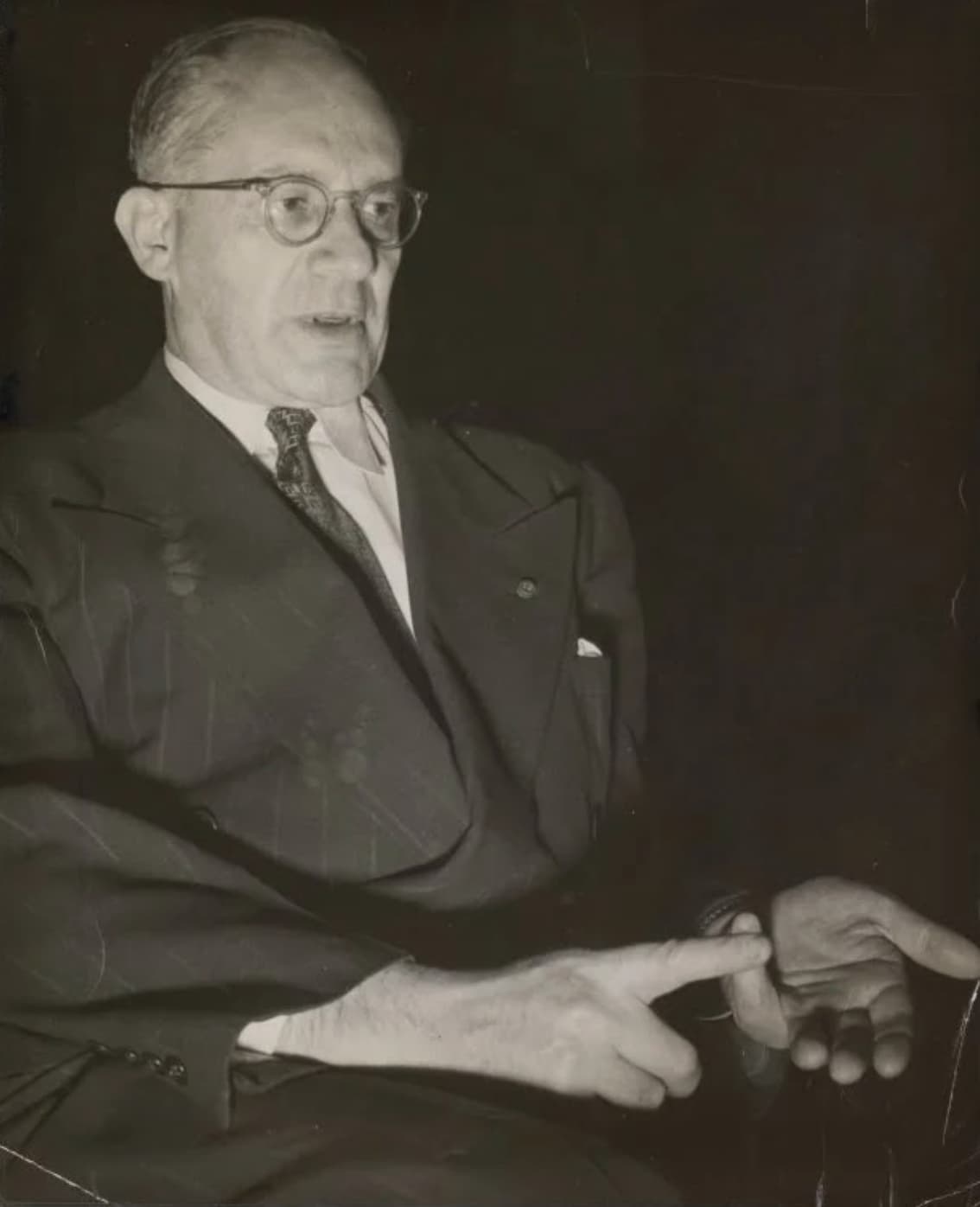
Raphael Lemkin. Source: New York Public Library Digital Collections
It is not known exactly what happened to the family during World War I and the Polish-Bolshevik War. According to some sources, Raphael studied at a gymnasium in Vilnius, but according to the information he himself provided in his student forms, he received his secondary education in Białystok.
After two semesters in Krakow, Lemkin enrolled at the University of Lviv, where he studied under Juliusz Makarewicz, the legendary professor of criminology. The idea that the motive for a crime influences its classification – because it matters whether a murder was committed for the purpose of self-defence or theft – had been gradually developing in Europe since the 19th century, and Makarewicz systematised it for Polish law.
The professor's outstanding students included Raphael Lemkin himself, with his concept of genocide, and Hersch Lauterpacht, who coined the term ‘crime against humanity.’ A lifelong dispute continued between the two scholars: Lauterpacht limited criminal law to the framework of the state, where the law itself is purely ‘by the book’, while Lemkin insisted on the universal significance of certain crimes, regardless of their recognition by specific states. For Lemkin, law was inseparable from morality, because it is morality that creates legal categories.
“But Armenians aren’t chickens!"
Lemkin, then a student, was shocked by the news of the assassination of Mehmed Talat Pasha, former Grand Vizier of the Ottoman Empire, by the Armenian Soghomon Tehlirian. The official was one of the organizers of the mass murder of Armenians, and although a Turkish tribunal sentenced him to death, the sentence remained on paper because the perpetrator fled to Germany, where he lived under a false name. The Armenian party decided to punish the organisers of the crime on their own, in particular Soghomon, whose entire family had been killed. Over the body of the murdered Teylirian, he said, ‘For my mother.’ The jury acquitted Soghomon, and the German court effectively became an international forum for discussing the crime against the Armenians.
In his memoirs, Lemkin recalled how he asked a professor (it is not known who exactly) why the international community did not react when mass killings took place in Turkey. His colleague reminded him of the sovereign power of the state and drew an analogy with a farmer: on his own property, he can do whatever he wants — no one will reprimand him for slaughtering chickens. Lemkin replied:
‘But Armenians aren't chickens!’
Raphael Lemkin continued to explore the issues raised during his studies in Lviv, because the ‘classical’ law school proved powerless in the face of the crimes of the 20th century, the scale of which went beyond national jurisdictions.
While his career in the Polish justice system was developing, Lemkin sought a universal legal concept that could serve as a benchmark for international law and protect humanity, regardless of the national borders within which crimes were committed.
49 relatives killed during the Holocaust
When World War II began, Lemkin had successfully pushed for official recognition of mass crimes, systematising them into two terms: ‘barbarism’ – destruction based on the hatred of race, religion or membership of a social group, and ‘vandalism’ – crimes based on the same grounds but against culture and art.
The Nazis killed 49 members of Lemkin's family, including his parents, but Lemkin himself managed to emigrate to the United States, where he spent two years analysing documents on Nazi occupation policy. He presented the results of his work in the book Axis Rule in Occupied Europe (1944), where he combined the previously proposed terms ‘barbarism’ and “vandalism” into the term ‘genocide’: from the Greek ‘geno’ – family, tribe or nation, and the Latin ending “cide” – to kill. In the book, the new concept is defined as ‘the destruction of a nation or an ethnic group,’ and is not limited to the physical destruction of all or a part of its members. Lemkin explains it this way:
“Genocide doesn't mean the immediate destruction or eradication of a nation or people, but rather a coordinated plan of different actions aiming at the destruction of essential foundations of the life of national groups, with the aim of annihilating the groups themselves.”
According to Lemkin, genocide has two phases: the first is the destruction of the national order of the oppressed group, and the second is the imposition of the national order of the oppressor. Lemkin defined culture as the soul of a nation, and therefore emphasised that occupation regimes resort to erasing culture in order to deprive a community of its identity – and thus its future.
In the scientific community of the time, Lemkin's work was received without much enthusiasm: a significant part of the legal community believed that there was no proper basis for distinguishing a new crime. However, the scholar was determined – he wrote hundreds of letters to diplomats, lawyers, and politicians, and after the war became an advisor to the American delegation at the Nuremberg trials, where the term ‘genocide’ was used but still had no official legal definition.
Lemkin continued to knock on the doors of the UN, write articles, and speak to communities until, on 9 December 1948, the UN General Assembly adopted the Convention on the Prevention and Punishment of the Crime of Genocide. However, the adopted definition was narrower than the original concept: the UN focused on physical and biological destruction, while Lemkin also pointed to indirect methods – the destruction of cultural, linguistic, religious and economic foundations, leading to the disintegration of the threatened group. Politicians promised to supplement the Convention with later resolutions, but never did so.
A photo from the UN archive
The Holodomor – the largest experiment in russification
As a scholar, Lemkin was educated in Lviv, and the policies of the Polish authorities who controlled the city were discriminatory: in an effort to assimilate and ‘pacify’ the population, the foreign state was suppressing the Ukrainian language and persecuting activists. News of the Holodomor also partially influenced his future concept of genocide.
In his 1953 address, ‘Soviet Genocide in Ukraine,’ Lemkin directly called the Holodomor a crime of genocide aimed at destroying the Ukrainian nation, emphasising: ‘this extermination is not only of individuals, but also of culture.’ According to Lemkin, the Holodomor was the longest and most extensive experiment in Russification, and a new Soviet identity was to replace the erased Ukrainian identity. The scholar warned:
“ And yet, if the Soviet program succeeds completely, if the intelligentsia, the priests and the peasants can be eliminated, Ukraine will be as dead as if every Ukrainian were killed, for it will have lost that part of it which has kept and developed its culture, its beliefs, its common ideas, which have guided it and given it a soul, which, in short, made it a nation rather than a mass of people..”
[Rafał Lemkin’s lecture “Soviet Genocide in Ukraine,” 1953]
Lemkin was among those professors who condemned Russian imperialism and called on the American government to help non-Russian peoples in the ‘Soviet slave empire.’ The Ukrainian case became the ‘key’ because it combined the scale of the tragedy, the documentation of facts, and the symbolism of the crime for all of Eastern Europe.
Lemkin's Ukrainian speech remained marginal for a long time: at the height of the Cold War, the United States tried to maintain political balance, so academic circles avoided openly anti-Soviet topics. Jewish organisations, which had previously supported Lemkin, focused on commemorating the Holocaust and supporting the state of Israel.
The scholar spent his last years in New York. His small room on West 112th Street was filled with books and documents, but lacked even a telephone or a dressing room. He lived in poverty and loneliness, with no family or children.
Philip Sands, in his book East-West Street, recounts various memories of Lemkin's funeral: some say that there were very few people, but Lemkin's close friend Nancy Eckley recalled that there were more than five or six people present, including many women in veils.
Raphael Lemkin is buried in New York, at Mount Hebron Cemetery in Queens.
Political compromises vs justice
The UN debated at length over the definition of groups to be included in the list of potential victims of genocide: the text of the Convention on the Prevention and Punishment of the Crime of Genocide (1948) was drafted by committees with quite diverse membership, and the final document was a compromise between different national interests and ideological trends.
In the process, the ‘cultural component’ was categorically rejected because of its ‘excessive vagueness and lack of connection with the physical and biological destruction of a group, which prompted the adoption of the Convention.’ Clearly, the Western states' rejection of the concept of ‘cultural genocide’ at the time was linked to colonial practices, when states imposed their language, education, religion and way of life on the peoples under their control. The persecution of political groups was also rejected, allowing states to avoid accusations if they destroyed opposition movements.
As is typical for a legal document, the Convention on the Prevention and Punishment of the Crime of Genocide was forward-looking. The adopted version consists of nineteen articles, which mainly concern the prevention of the crime and its punishment when preventive measures are unsuccessful. However, dependence on the UN Security Council has effectively led to political paralysis: decisions on the application of the Convention are now blocked by the veto power of permanent members, including the aggressors themselves. As a result, authoritarian regimes today are effectively immune from punishment. Even when there are signs of genocidal intent, there is a certain political bias against prosecuting genocide – international courts often classify such crimes as crimes against humanity or war crimes. Thus, despite the Convention defining the transfer and assimilation of children as a genocidal practice, arrest warrants for Putin and Lvova-Belova were issued for war crimes.
Thus, the compromises made by the political elites back in 1948 turned the Convention into a symbolic instrument rather than a legal mechanism, as Lemkin had intended, emphasising that if crimes are not properly classified, the world will not achieve prevention and punishment, but a delayed repetition of tragedies.
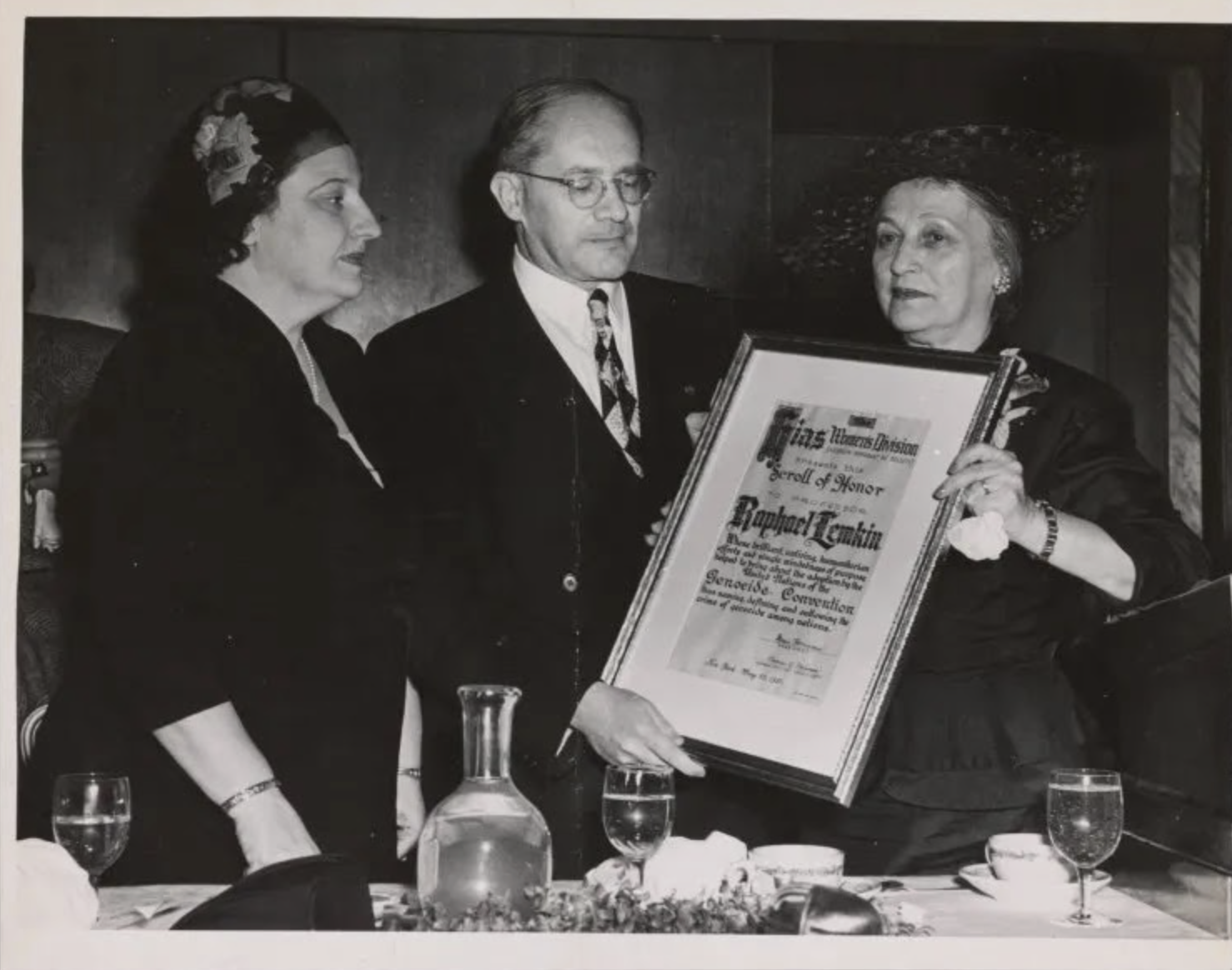
The Women’s Division of the Jewish Immigrant Aid Society presents an honorary scroll to Raphael Lemkin. Source: The New York Public Library Digital Collections
The Raphael Lemkin Society in Ukraine
In Ukraine, lawyers, researchers, cultural figures and human rights activists have joined forces in the Rafael Lemkin Society to seek accountability for Russia's genocide and, with Ukraine serving as a precedent, contribute to the formation of a new international security system.
As Russia is deliberately destroying Ukrainian culture, the association provides support to cultural institutions that have suffered losses from the aggression, in particular through legal assistance in criminal proceedings at the national and international levels. In addition, the Raphael Lemkin Society advocates for a systematic approach to the consideration of Russia's crimes against Ukrainian culture as part of its genocidal practices.
Since countering genocide must be based not only on international but also on national criminal law, the Raphael Lemkin Society is promoting amendments to the Criminal Code of Ukraine regarding the definition of ‘genocide,’ which would allow Russians to be prosecuted for crimes against Ukrainian culture. The association hopes that its allies will eventually adapt their criminal codes as well.
Another important project of the Raphael Lemkin Society is the preparation of submissions to international institutions against Russia. According to the association's members, systematic crimes against Ukrainian culture are direct evidence of Russia's genocidal intent.